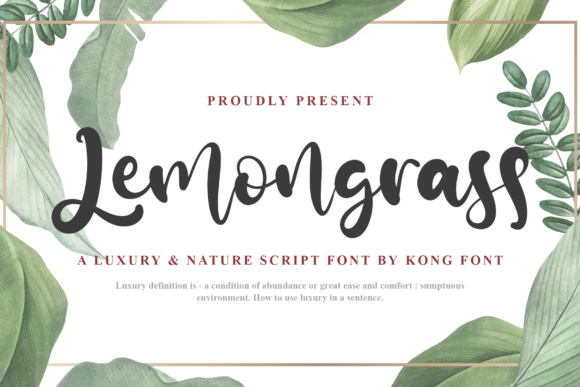
Lemongrass Font for Creative Publishing
Lemongrass is a modern and playful handwritten script font that brings a fresh, approachable energy to editorial design. As a freebie in the Fonts category, it offers designers and content creators a versatile tool for adding personality to their work. Whether you're designing a blog header, crafting a magazine cover, or creating printable materials, Lemongrass can elevate your visual storytelling with its unique charm.
Lemongrass for Blog Headers and Magazine Covers
Lemongrass is ideal for blog headers and magazine covers where visual impact matters most. Its handwritten style adds a personal touch that stands out in a sea of standard fonts. For example, a lifestyle blog could use Lemongrass for its main title to create an inviting and authentic feel. Similarly, a digital magazine might incorporate it into a cover layout to draw readers in with its friendly, creative vibe.
When using Lemongrass on a blog header, consider pairing it with a clean sans serif font for body text. This contrast helps maintain readability while keeping the design engaging. The font works well in both dark and light backgrounds, making it adaptable for various themes and styles.
Lemongrass for Ebook Titles and Newsletter Graphics
Lemongrass shines when used for ebook titles and newsletter graphics, where a bold and expressive typeface can make a strong impression. A recipe ebook, for instance, could feature Lemongrass in its title to evoke a sense of warmth and creativity. In newsletters, it can be used for subject lines or section headers to add visual interest and guide the reader’s eye through the content.
For printable guides or worksheets, Lemongrass can serve as a decorative element that enhances the overall aesthetic. It pairs well with minimalist layouts, allowing the font to stand out without overwhelming the design. When exporting to PDF or print, ensure the font is embedded properly to maintain its appearance across different devices and formats.
Lemongrass for Quote Graphics and Section Headings
Lemongrass is particularly effective for quote graphics and section headings, where a stylized font can add emphasis and personality. A motivational quote graphic could use Lemongrass to give the message a more intimate and heartfelt tone. In a coaching workbook, it might be used for chapter openers to create a sense of anticipation and engagement.
When using Lemongrass for section headings, keep the text short and impactful. Long paragraphs in this font may reduce readability, especially on smaller screens or mobile devices. Instead, use it for subheadings, pull quotes, or accent typography to maintain visual balance and clarity.
Lemongrass for Branding and Content Identity
Lemongrass can play a key role in establishing a brand’s identity, especially for businesses or publications with a creative or artisanal focus. A small business offering handmade products might use Lemongrass in its logo or packaging design to convey authenticity and craftsmanship. Similarly, a digital publication focused on wellness or self-care could incorporate the font into its branding to reinforce a calm and nurturing tone.
Consistency is essential when using Lemongrass for branding. Apply it consistently across all touchpoints—website headers, social media graphics, and printed materials—to build recognition and trust. Ensure that the font aligns with the overall visual language of the brand, reinforcing its message and values.
Lemongrass for Social Media Graphics and Web Design
Lemongrass is a great choice for social media graphics and web design, where a visually appealing font can enhance user experience. On platforms like Instagram or Pinterest, it can be used for captions, story overlays, or promotional banners to catch attention and convey a playful, modern aesthetic. In web design, it can be used for call-to-action buttons, hero sections, or navigation menus to add a touch of personality.
When integrating Lemongrass into web design, consider its performance and compatibility. Use it sparingly to avoid slowing down page load times, and ensure it displays correctly across different browsers and devices. For web use, check if the font includes OpenType features such as ligatures or alternate characters to enhance its versatility.
Lemongrass for Printables and Digital Downloads
Lemongrass is well-suited for printables and digital downloads, where a stylish font can make a significant difference in the final product. A printable planner might use Lemongrass for date headers or task labels to add a personalized touch. A downloadable worksheet for a course or workshop could feature the font in its title or section headings to create a cohesive and professional look.
For commercial use, ensure that the font’s licensing terms allow for distribution in digital downloads, templates, or client projects. Many free fonts include specific restrictions, so review the license carefully before incorporating Lemongrass into paid or commercial work.
Lemongrass for Display Typography and Accent Text
Lemongrass excels as a display font and accent text, where its unique character can shine without competing with body copy. In a digital magazine, it could be used for pull quotes, caption tags, or decorative elements to add visual rhythm and variety. In a cookbook, it might appear in recipe titles or ingredient lists to create a warm and inviting atmosphere.
Pairing Lemongrass with a complementary font enhances its effectiveness. A serif font like Georgia or Garamond can provide a classic contrast, while a sans serif like Helvetica or Arial can offer a modern, clean balance. Experiment with different pairings to find the right combination for your project.